In the rapidly evolving world of e-commerce, multi-vendor marketplaces face a unique challenge: helping shoppers find exactly what they want among millions of products from thousands of sellers. Traditional keyword-based search often falls short, especially when product descriptions vary wildly or when shoppers can't articulate what they're looking for. Enter image and text embeddings—a cutting-edge AI technique that's transforming product discovery. In Tunisia, a burgeoning e-commerce market, Dokkan, the leading multi-vendor mobile app, is pioneering this technology to offer a seamless shopping experience. This article explores how embeddings work, why they matter for marketplaces, and how Dokkan is bringing this innovation to Tunisian consumers.
What Are Image and Text Embeddings?
At their core, embeddings are numerical representations of data—whether text, images, or audio—in a high-dimensional space where similar items are placed closer together. For text, models like BERT or Word2Vec convert words or sentences into vectors that capture semantic meaning. For images, convolutional neural networks (CNNs) or vision transformers extract visual features into vectors. When you combine both, you get a multimodal embedding that understands the relationship between words and visuals.
The magic lies in the fact that these vectors encode meaning, not just literal matches. For example, a search for "summer dress" will also retrieve products labeled "light floral frock" because the embeddings recognize semantic similarity. Similarly, uploading a photo of a handbag will surface visually similar items, even if the text description uses different terms.
Why Multi-Vendor Marketplaces Need Embeddings
Multi-vendor marketplaces aggregate products from countless sellers, each with their own naming conventions, languages, and description styles. This diversity creates a discovery problem: a shopper searching for "wireless headphones" might miss listings titled "Bluetooth earphones" or "cordless audio headset." Keyword search fails to bridge these gaps.
Embeddings solve this by mapping all products into a shared semantic space. They enable:
Semantic Search
Instead of matching exact words, the system understands intent. A query for "gift for a gardener" can retrieve gardening tools, planters, or books—even if sellers didn't use those exact words.
Visual Search
Shoppers can snap a photo of a product they like and find similar items on the marketplace instantly. This is particularly powerful for fashion, home decor, and accessories, where visual appeal drives purchase decisions.
Personalized Recommendations
By analyzing a user's browsing and purchase history, embeddings can suggest products that align with their taste, even across categories. This increases cross-selling and upselling opportunities for sellers.
Dokkan: Bringing Embeddings to Tunisia's E-Commerce Landscape
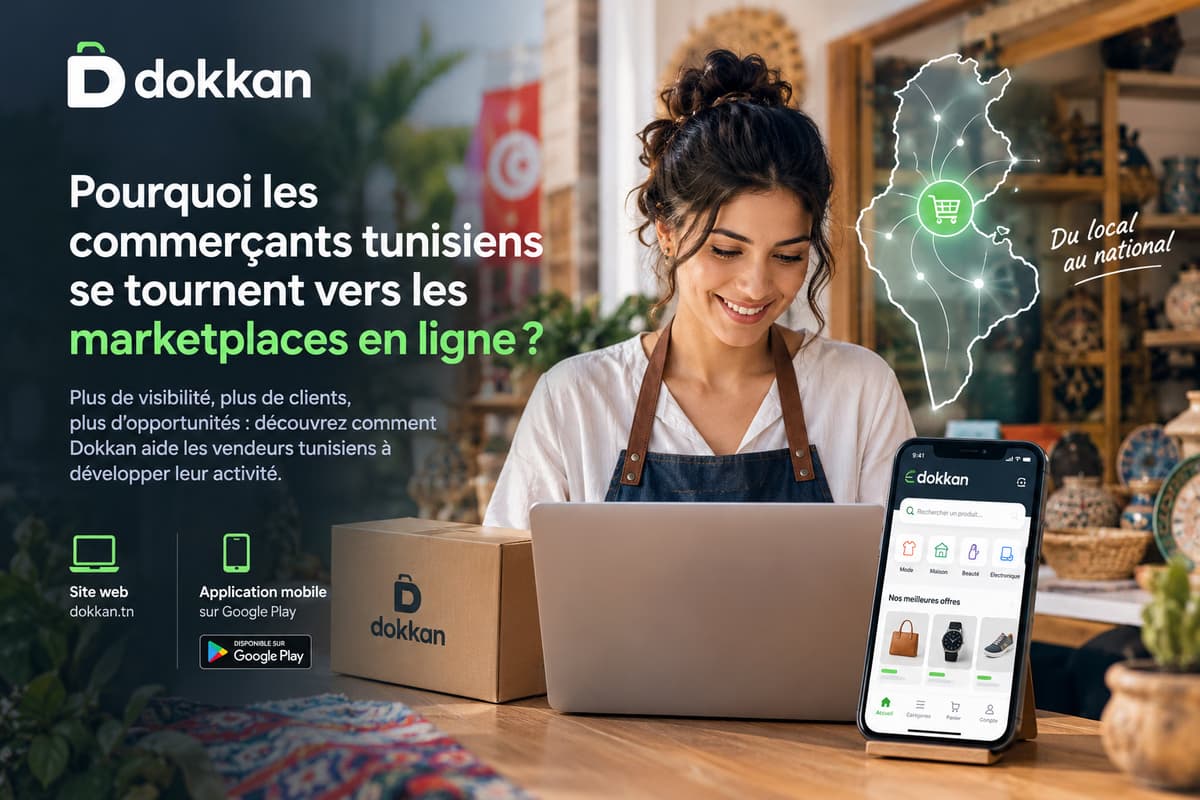
Dokkan, Tunisia's premier multi-vendor marketplace mobile app, has recently integrated image and text embeddings into its platform, becoming one of the first in the region to do so. This move is set to redefine how Tunisians shop online.
The Tunisian Market Context
Tunisia has a growing e-commerce sector, with a young, tech-savvy population increasingly shopping via smartphones. However, the market is fragmented, with many small and medium-sized sellers listing products across various platforms. Language is also a factor: product descriptions often mix Arabic, French, and English, making keyword search even more challenging. Dokkan's adoption of embeddings addresses these local nuances head-on.
How Dokkan Uses Embeddings
Dokkan's app now allows users to search using natural language queries in Arabic, French, or English, and even upload images to find similar products. The underlying embedding models are trained on multilingual data and a vast catalog of product images, ensuring accurate results regardless of the language used or the quality of the photo. For example, a user can type "robe de soirée" (evening dress) or upload a picture of a dress they saw on social media, and Dokkan will show a curated selection from multiple sellers. This not only improves discovery but also helps smaller sellers gain visibility by having their products surfaced in relevant searches, not just those with perfect keywords.
The Impact on Product Discovery and User Experience
The integration of embeddings has several tangible benefits:
Increased Conversion Rates
When shoppers find what they're looking for faster, they're more likely to buy. Dokkan has reported a significant uptick in conversion since implementing embedding-based search.
Enhanced Seller Fairness
New or niche sellers with poorly optimized listings can still be discovered if their products are visually or semantically relevant. This levels the playing field and encourages more sellers to join the platform.
Reduced Search Abandonment
Frustrated users who can't find what they want often leave the app. Embeddings reduce this by delivering relevant results even for vague or misspelled queries.
Why This Is a Game-Changer for Tunisia
Embeddings are not entirely new globally—major players like Amazon and Alibaba have used them for years. But in Tunisia, this technology is still in its infancy. Dokkan's implementation marks a significant leap forward, democratizing access to advanced AI for both consumers and sellers. It signals that Tunisian e-commerce is ready to compete on a global scale, offering a user experience that rivals international platforms.
Moreover, by supporting multilingual and visual search, Dokkan caters to the unique linguistic and cultural fabric of Tunisia, where code-switching is common. This local relevance could be a blueprint for other North African markets.
Challenges and Future Directions
Implementing embeddings is not without challenges. It requires substantial computational resources, high-quality training data, and continuous fine-tuning. Dokkan must also ensure that the system doesn't inadvertently favor popular sellers or introduce biases. As the platform grows, scaling the infrastructure to handle millions of queries will be crucial.
Looking ahead, Dokkan could integrate augmented reality (AR) for virtual try-ons or voice search, further enhancing discovery. The roadmap likely includes expanding embedding models to understand Tunisian dialect (Derja) more deeply, making the experience even more seamless.
Conclusion
Image and text embeddings are reshaping product discovery in multi-vendor marketplaces by making search smarter, more visual, and more inclusive. Dokkan's pioneering adoption in Tunisia is a testament to the country's digital potential. As more marketplaces embrace this technology, we can expect a future where finding the perfect product is as easy as a snap or a sentence—no matter where you are or what language you speak.